
——–
Contents
Information & help for people affected by Molluscum contagiosum virus (MCV)
A benign viral infection of the skin that is not particularly harmful or painful. There are four types of Molluscum contagiosum Virus, (MCV-1, MCV-2, MCV-3 & MCV-4). MCV-1 is the most common type of infection and MCV-2 is predominantly seen in adults. MCV infects only human beings. Information includes symptoms, diagnosis, treatment, transmission, prevention and other general information.
Symptoms of Molluscum
Molluscum causes normal skin to grow into bumps. There is no pain or discharge from these but they may bleed if cut. Symptoms usually appear between 2-12 weeks after being exposed to the infection, but can take years to manifest.
Common Symptoms include:
- Small, waxy, round, raised polyp-like growths (often with a tiny depression in the middle) which may be single at first, but can multiply into clusters, containing a firm white substance rather than pus.
Molluscum infections and blisters occur wherever the virus enters the body, usually on the:
- abdomen/belly
- genitals
- thighs
The blisters can be:
- clear
- flesh-colored
- pink
- white
- yellow
Other Symptoms
- Itching
- red, scaly skin around the blisters
Individual blisters may disappear on their own after about two months, but the general outbreak can last anywhere from six months to three years.
———-
Photos of Molluscum Symptoms————
Transmission of the Molluscum Virus
———–
The virus is transmitted by:
- direct skin-to-skin contact with infected skin
- manual contact, such as sharing towels and sports/locker room equipment
- nonsexual, intimate contact
- scratching, picking or breaking the blisters and touching one another (especially in preschool and elementary school children)
- vaginal, anal, and oral intercourse
The molluscum virus has a higher incidence in children, sexually active adults, and the immunodeficient. such as people with AIDs.
In 2010, approximately 122 million people were affected by the Molluscum contagiosum virus MCV.
How is Molluscum Diagnosed
Unfortunately the virus cannot be routinely cultured. Molluscum contagium virus can be diagnosed by performing an excisional biopsy.
Diagnosis is usually ascertained by:
- clinical observation of the symptoms by a dermatologist
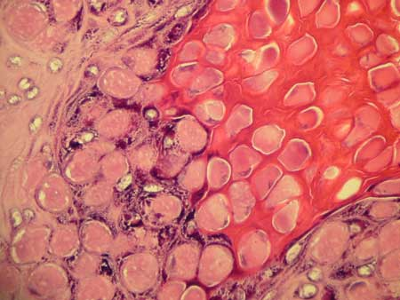
- infected tissue examined under a microscope for:
- “abundant granular eosinophilic cytoplasm” &
- “a small peripheral nucleus”
Treatment of Molluscum
Although the virus remains in the body, the immune system of a healthy person can usually control the outbreaks, causing the blisters to disappear. There are potent herbal formulations that assist your immune system and attack the virus internally.
Outbreaks can recur, possibly triggered by a weakening of the immune system. The infection usually clears up in 6-18 months without any treatment.
Molluscum is generally treated by destroying the infected skin. Growths are usually removed using one of the following techniques:
- burning growths off with a potent acid, such as Trichloracetic Acid
- electrical current
- freezing the growths with liquid nitrogen
- laser surgery using a blistering agent, such as Podophyllin which is made from rainforest beetles)
- Retin A ® a common acne treatment (often used with children)
Once the head of the lesion has been destroyed, the infection is gone, because the virus is contained in the central waxy core of the lesion.
Molluscum Relief Cream — Get Rid of Molluscum Fast with All-Natural Terrasil™. FedEX Offer.
Notes about treatment:
Always use a health professional / dermatologist who is trained in the removal of Molluscum growths to prevent damage to the normal surrounding tissue.
Molluscum Infection Prevention
To reduce the chance of being infected by the Molluscum virus it is sensible to take the following tips into consideration:
- abstain from sex
- using latex condoms and gloves may offer some protection if the lesion is on the penis, if they are put on before sex and worn until sexual contact is over
- limited sexual partners to one uninfected person
- people infected with Molloscum contagiosum are best advised to abstain from sex while symptoms appear and should wait until the blisters have been successfully removed or healed
- restricting body contact between infected and uninfected people can help reduce the chance of spreading infection
- some skin cancers may look like Molluscum so it is important that any abnormal lumps or bumps be examined by a health professional
Do not:
- share towels and washcloths
- squeeze the lesions, as this makes them more contagious
Note
- the virus may ‘shed’ beyond the area protected by the condom
- washing, douching or urinating after sex does not prevent STDs
Molluscum Prognosis
- persons with weak immune systems may experience Molluscum outbreaks elsewhere on the body
- assisting your body’s viral defenses so that they attack the molluscum virus
- fast removal of symptoms limits the size of growths & potential of the “pox” scar. MCV growths can reach the size of a large pea or marble. Large lesions can cause crater-like scarring.
- the more Molluscum Information you learn the easier the condition will be to deal with.
