
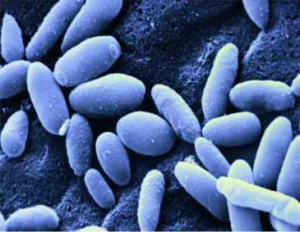
Information and pictures on common Yeast Infections. This condition is caused by micro-organisms / fungi and can be transmitted sexually. Information includes symptoms, diagnosis, treatment, transmission, prevention and more.
Contents
Yeast infections are also called Candidiasis and are generally caused by a fungus called Candida albicans.
There is no direct evidence that yeast infections are passed through sexual intercourse. However, almost half of all healthy, sexually active women, and one-third of all pregnant women tested had Candida albicans present. This indicates that sexual activity may contribute to the growth of Candida albicans.
Certain types of yeast may be present in harmless amounts in the:
- bowels
- digestive tract
- mouth
- skin
- vagina
Under certain conditions, an overgrowth of yeast can occur. Yeast infections or fungal growths usually develop in a moist environment, such as:
- finger and toe nails
- folds of skin
- genitals
- webs of fingers and toes
Yeast Infection Symptoms
Candida albicans In Women:
Symptoms may vary from very mild to severe and include:
- burning of the vagina
- burning when urinating
- discomfort during or after sexual intercourse
- odor (not unpleasant)
- irritation of the vagina
- itching and burning of the female genitals (vulva)
- itching of the vagina
- painful urination
- painful intercourse
- vulva redness and swelling
Vaginal discharge is not always present and may be minimal, but when present may be:
- cottage-cheese-like in nature
- a thick, whitish-gray discharge
- watery to thick in consistency
Women who have chronic or recurring yeast infections may need to be treated with vaginal creams for extended periods of time
In Men
Men may not experience any symptoms of the infection. If symptoms are present they may include:
- burning sensation during intercourse
- burning sensation of the penis
- symptoms after intercourse if condoms not used
- transient rash
Other Types of Yeast or Fungal Infections
Balanitis
Balanitis is an irritating infection of the penis. Balanitis symptoms include:
- red patches and blisters at the end of the penis and around the foreskin
- severe itching and pain
Moniliasis
Moniliasis is a painful vaginal yeast infection which may occur during:
- antibiotic treatment
- pregnancy
Symptoms of Moniliasis:
- excessive thick, white discharge
- pain during intercourse
- redness and swelling of the vulva
- vaginal itching and irritation
Intertrigo
Intertrigo is a skin irritation caused by friction between moist adjacent surfaces, and often accompanied by bacterial or fungal infection.
Symptoms of Intertrigo:
Skin Symptoms
- burning
- cracking
- itching
- moistness
- painful, red inflamed skin containing pus
- peeling on the hands, particularly between the fingers and swollen nail folds above the cuticle
- shiny, pink rash with a scaly or blistered edge in the folds of the skin
Oral Thrush
Oral Thrush is a painless infection of the mouth and throat which can often recur. It can affect all ages, but is most common in:
- babies
- the elderly
- young children
Symptoms of Oral Thrush:
- painless white patches in the mouth or throat
Systemic yeast Infections
Systemic yeast infections can occur in persons with:
- AIDS
- ailments or drug treatments that suppress the immune system
- diabetes
Esophageal Thrush (a complication of AIDS)
- painful swallowing
- white patches in the mouth and throat
Yeast Infection Transmission
The source of chronic candida yeast overgrowth is usually the gastrointestinal tract.
The vagina or urethra can pick up the infection through sexual contact, although sexual contact with an infected partner does not usually spread the fungus.
Yeast overgrowth usually occurs as the result of:
In women
- fatigue
- high stress
- hormonal fluctuations during the menstrual cycle
- increased warmth and moisture in the vaginal area
- menopause
- not drying the outer vaginal area thoroughly after bathing
- oral contraceptives (birth control pills)
- perfumed feminine hygiene sprays
- poor diet
- poorly ventilated clothing and underwear
- poor personal hygiene
- pregnancy
- some pharmaceutical prescriptions
- tight-fitting clothing or pantyhose
- use of antibiotics, in particular ‘broad spectrum’ antibiotics
- vaginal intercourse with inadequate lubrication
- wearing a damp bathing suit or pantyhose for an extended time
Other Factors
- douches wash away healthy secretions and normal bacteria and dry the surface of the vagina
- steroid medicines, such as Prednisone
- sweating
- topical anti-microbial agents
- uncontrolled diabetes mellitus, which raises blood sugar levels making a good environment for yeast to grow
Candida may be transmitted between people by sexual contact.
In Men
Men also get yeast infections caused by:
- condoms with nonoxynol-9 added to the lubricant which may contribute to anal yeast infection
- direct contact
- unprotected sex
and can also be caused from:
- diabetes (men with diabetes are more susceptible to yeast infections due to elevated sugar in the urine)
- prolonged antibiotic use
Help Factors
- Abstain from vaginal intercourse until you are infection-free.
- Keep sex devices clean.
- Wash your hands or change your gloves in between touching sexual organs.
Method of Diagnosing Yeast Infections:
Laboratory Tests
To correctly diagnose a yeast infection a culture is needed. An examination of vaginal secretions is looked at under a microscope for evidence of:
- common skin changes of the vulva and vagina
- yeast forms
Research
A rapid simple test for yeast infection is being developed
Conditions Commonly Confused as Yeast Infection
Yeast Infection Treatment
Various anti-fungal vaginal medications are available to treat yeast infection in the form of:
- anti-fungal creams
- anti-fungal suppositories
- anti-fungal tablets
These include:
- Butoconazole
- Clotrimazole (Mycelex-7)
- Diflucan
- Femmesil™ Cream (Fast-Acting Treatment for Yeast Infection)
- Gyne-Lotrimi
- Miconazole
- Monista
- Nizoral
- Nystatint
- Pau D’arco
- Sporanox
- Terazol
- Tioconazole
- Vagistat
- Vitaklenz
Do not use any products without seeing a doctor or health professional if you:
- are a female under the age of 12
- are not sure that your problem is a yeast infection
- are nursing a baby
- are pregnant
- are sensitive/allergic to any of the ingredients in Mycelex-7 or to any other Mycelex product
- have never had a yeast infection before
Caution
Mycelex-7:
- and all other medications should be kept away from children.
- Is for vaginal use and not for use in the eyes or mouth.
Note
- If your symptoms persist after 7 days, or return within 2 months see your doctor or health practitioner.
- Products containing antihistamines or topical anesthetics mask the symptoms and do not treat the underlying problem.
- Rarely is a yeast infection confined to the vagina, so just treating the vaginal yeast infection often does not prevent recurrent infections.
See your doctor or health professional immediately if any of the following symptoms occur:
- back pain
- fever
- foul-smelling discharge
- lower abdomen pain
- shoulder pain
Natural Treatment
Dietary changes are essential in the treatment of yeast infection.
Dietary Recommendations for Acute Candida
Diet is a very important contributing factor in chronic Candida infections. It is very important to treat the digestive tract as this area can re-infect the vagina if left untreated.
Whole Foods Diet
Include:
- fresh vegetables and fruits
- fish and poultry
- flax seed (Linseed)
- whole grains
- organically raised foods where possible.
- other essential fatty acids, such as olive oil and nuts
- plenty of fresh water
- 1 tablespoon Psyllium seed husk fiber and/or 6 to 8 tablespoons flax seed meal and/or ¼ cup Oat bran daily
- Pau D’arco
- Vitaklenz
Avoid:
- alcohol
- animal fats
- caffeine
- dairy products
- fast foods
- hydrogenated oils and margarine
- processed foods
- junk foods
- sugar
- white flour products
Suppository Treatment
Boric acid suppositories:
- 600mg Boric Acid suppositories inserted vaginally every night before bed for 3-5 nights.
External Treatment
- Warm sitz baths infused with several drops Tea Tree oil (Melaleuca alternifolia).
Vaginal douching with tea infusion of one or both of the following dried herbs:
- Goldenseal (Hydrastis canadensis)
- Oregon Grape Root (Mahonia aqjuifolium)
Other Natural Treatments
Boric Acid/Borax
Boric Acid/Borax kills severe or persistent yeast infections.
Method
- Fill 00 capsules with Boric Acid to use as vaginal suppositories.
- Insert 2 capsules filled with Boric Acid into the vagina every night for a week.
Caution
Boric Acid may cause:
- large amounts of vaginal discharge,
- superficial burning and discomfort for the first few days.
Note
- Discontinue use if the burning is severe.
Cranberries
Cranberries are often used in treating urinary tract infections.
- They are a rich source of Vitamin C.
- They contain substances that inhibit microbes from clinging to the walls of the urinary tract.
- They lower the pH of urine which helps to combat yeast infections
Garlic
Garlic contains natural anti-fungal substances that kill off yeast.
Method
- Wrap an unpeeled clove of garlic in gauze or cheesecloth. Tie the ends with unwaxed dental floss, leaving a length of string to use to pull it out afterward.
- Leave it in for several hours at a time.
- Use nightly until symptoms cease.
Note
- Care should be taken not to cut the clove of garlic as the juice may sting and cause irritation.
- Garlic capsules may be used instead.
Caution
- This may not work on stubborn infections.
- Occasionally people are allergic to garlic.
Hydrogen Peroxide
Hydrogen Peroxide is produced naturally by bacteria in your vagina and kills yeast.
If you wish to increase Hydrogen Peroxide:
Method
- Mix 1 teaspoon of ordinary 3% hydrogen peroxide from your market or pharmacy with 1 cup of water. Use as a douche once a day until symptoms cease.
Pau D’arco
Pau D’Arco is a rain forest remedy made from the inner bark of a South American tree. Indigenous South American tribes have traditionally drunk tea made from the shredded inner bark to boost their immunity. In 1882, one of Pau D’Arco’s constituents was isolated and identified as lapachol, an antimicrobial and potentially tumour-fighting chemical. Besides lapachol, Pau D’Arco contains at least 20 other active ingredients. Modern scientific evidence shows that extracts of Pau D’Arco can protect against a wide range of bacterial and fungal organisms, including Candida albicans. The herb is also useful for treating athlete’s foot and fungal nail infections. Pau D’Arco is not recommended during pregnancy.
Method
- For adults: take two capsules with a meal three times daily.
- Five capsules are equivalent to two cups of Taheebo tea.
- For children age 6-12 years: take one capsule with a meal twice daily.
Caution
- Always read the label and follow the directions.
- If symptoms persist, consult your health care practitioner.
More information on Pau D’arco.
Potassium Sorbate
Potassium sorbate is a potent fungicide. It is used in preserving foods and brewing beer to stop the growth of the yeast at the correct time.
Method
- Make a 3% solution by adding 8 gm (about 1 tablespoon) potassium sorbate to a cup of water.
- Dip a cotton tampon in the solution, inserting it at bedtime and removing it in the morning.
- Continue treatment for a few days until the symptoms cease.
To relieve vulva itching
Method
- Make a paste of Slippery Elm powder and a little water and apply as needed.
- Soak a cotton pad in Aloe vera juice and apply as needed.
Note
- Slippery Elm or Aloe vera will only relieve itching. They will not kill yeast. Learn more about these herbs from the GHS Herb Information Library.
- Combine with an anti-fungal treatment.
Teatree Oil
Teatree Oil is widely used for yeast infections.
Method
- Soak a tampon with a lubricant, such as KY jelly or Olive Oil, and add a few drops of pure Tea Tree Oil and insert.
Caution
- Teatree oil can sting if it comes in contact with the vulva.
Vitaklenz
The double action of the powerful Vitaklenz formula assists in the elimination of parasites as well as Candida and Yeast infestations.
Vitaklenz is the result of thousands of years of accumulated knowledge from traditional medicines around the world that have successfully treated parasites and yeast infestations in humans.
The 12 active herbal ingredients in Vitaklenz are well known for their anti-parasitic, anti-candida and cleansing effects on the human system.
More information on Vitaklenz
Yoghurt
Yoghurt contains Lactobacillus acidophilus, a bacterium found in healthy vaginas, which kills yeast by producing hydrogen peroxide.
Method
- Apply directly to the vulva and into the vagina 1-2 times a day until after symptoms clear up.
Yeast Infection Prevention
Physical Hygiene
- Abstain from sexual activity during treatment.
- Always wipe from front to back after bowel movements.
- Change underwear and workout clothes immediately after exercising.
- Change tampons and sanitary pads often.
- Dry the vaginal area thoroughly after showers or baths.
- Get plenty of rest to help the body fight infections.
- Practice good hygiene by regularly washing the inside folds of the vulva where germs breed.
- Shower after swimming in a pool to remove the chlorine from your skin.
- Use unscented tampons or sanitary pads.
- Wear all-cotton underpants and panty hose with cotton crotches.
Dietary
- Eat well, including food products, such as yogurt containing live cultures of lactobacillus acidophilus.
- Limit your intake of sugar and foods containing sugar as it promotes the growth of yeast.
- Try to keep blood sugars under control if you have diabetes.
Risk Factors
Avoid using:
- bath oils
- bubble baths
- deodorant soaps
- feminine hygiene sprays
- perfumed soaps
The growth of yeast colonies increases if using broad spectrum antibiotics, such as:
- Amoxicillin
- Ampicillin
- Bactrim
- Ceclor
- Keflex
- Septra
The following may be made less effective if they come in contact with Mycelex-7
- condoms
- diaphragms
- vaginal spermicides
Yeast Infection Prognosis
When one partner is severely infected and continuous re-infections occur, the problem can become troublesome and chronic.
If a fungal infection has taken hold in the body, it can become a recurrent problem that is more difficult to treat with conventional anti-fungal agents. This can turn a simple infection into a chronic, tenacious condition that can seriously affect your immune system and overall health.
Other Factors
- Repeated use of over-the-counter and prescription medications can create imbalances in the healthy vagina allowing for resistant strains of Candida fungus or bacteria to take hold.
Recurring vaginal yeast infections may indicate a serious or underlying medical problem including:
- Diabetes
- HIV
- Immune system disorders
Note
See your doctor or health professional immediately if vaginal yeast infections:
- do not clear up easily with proper treatment
- recur (recurrence within a 2 month period)
or the following symptoms are experienced:
- abnormal genital irritation
- discharge
- pain
Candida Case Study
Susan had been suffering from recurrent thrush on a monthly basis when she first consulted a natural health practitioner. Further investigation revealed that she had been taking the oral contraceptive pill for years. She also averaged four courses a year of antibiotics for minor infections such as sinusitis and tonsillitis. She worked full time and was always on the go. Her diet was adequate but could be improved, particularly as she was partial to a regular glass or two of wine to relieve her stress.
Susan decided to discontinue the oral contraceptive pill and was prescribed a course of herbs to rebalance her hormone levels. Once her cycle was regular, it was time to address the issue of frequent thrush episodes. A finger prick blood test confirmed the presence of Candida. Her natural health practitioner began to treat this with the herb Pau D’Arco at 3,000 mg per day, and placed Susan on an anti-candida diet. All foods containing yeast and sugar were eliminated for a period of two weeks and then gradually reintroduced some. Susan focused on a maintenance diet of foods which have minimal or low sugar content such as fresh fruit and vegetables, wholegrain breads and pastas. She also included probiotic supplements daily to help rebalance the micro-organisms in her gut.
As the candida symptoms improved, Susan was treated with herbs such as garlic and Golden Seal to boost her immune system and reduce the chances of her developing sinusitis or tonsillitis in the future. This eliminated the need to take antibiotics, which made her body susceptible to Candida in the first place.
Susan continues to follow the maintenance diet and drinks only the occasional glass of wine and says she feels much healthier. Best of all she has not experienced any thrush or sinusitis since.
Source: http://www.globalherbalsupplies.com/health/blog/thrush
Candida Articles
Thrush … not just secret women’s business
A staggering one in three adults suffer from Candida overgrowth, or thrush as it’s more commonly termed. And what’s more surprising is the fact that many men get it too!
Soon after birth, the fungus Candida albicans develops in the intestinal tract of healthy individuals in its yeast-like ‘friendly’ form. Under certain conditions, however, Candida organisms can convert to a more menacing form, with root-like growths penetrating into the intestine wall. When this happens, toxins can be absorbed from the bowel into the bloodstream, with debilitating consequences …… Read more
